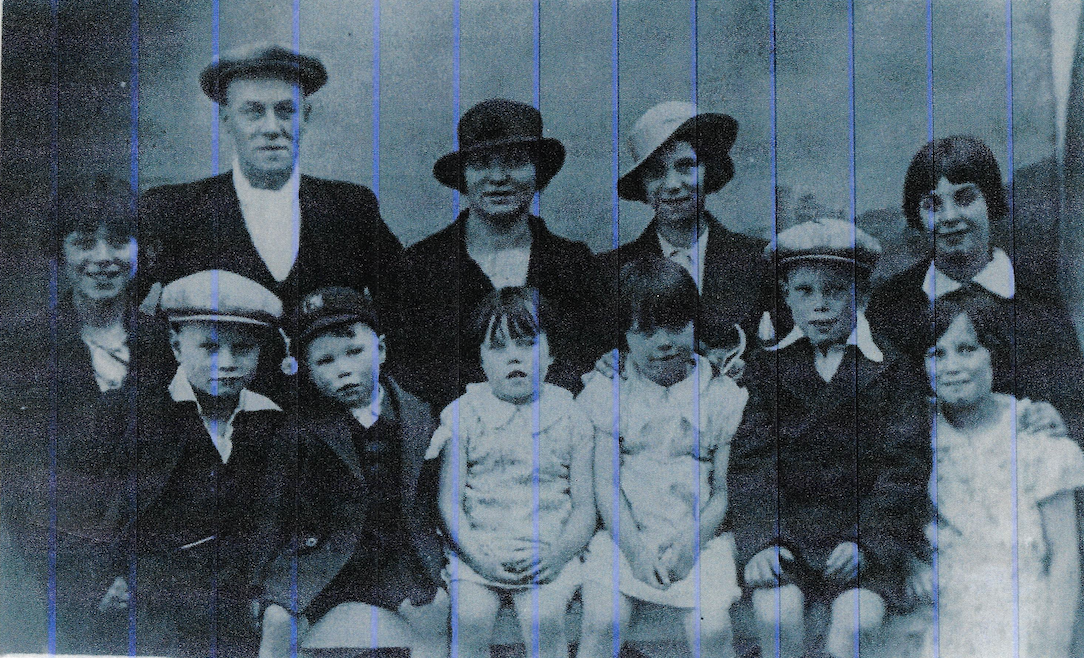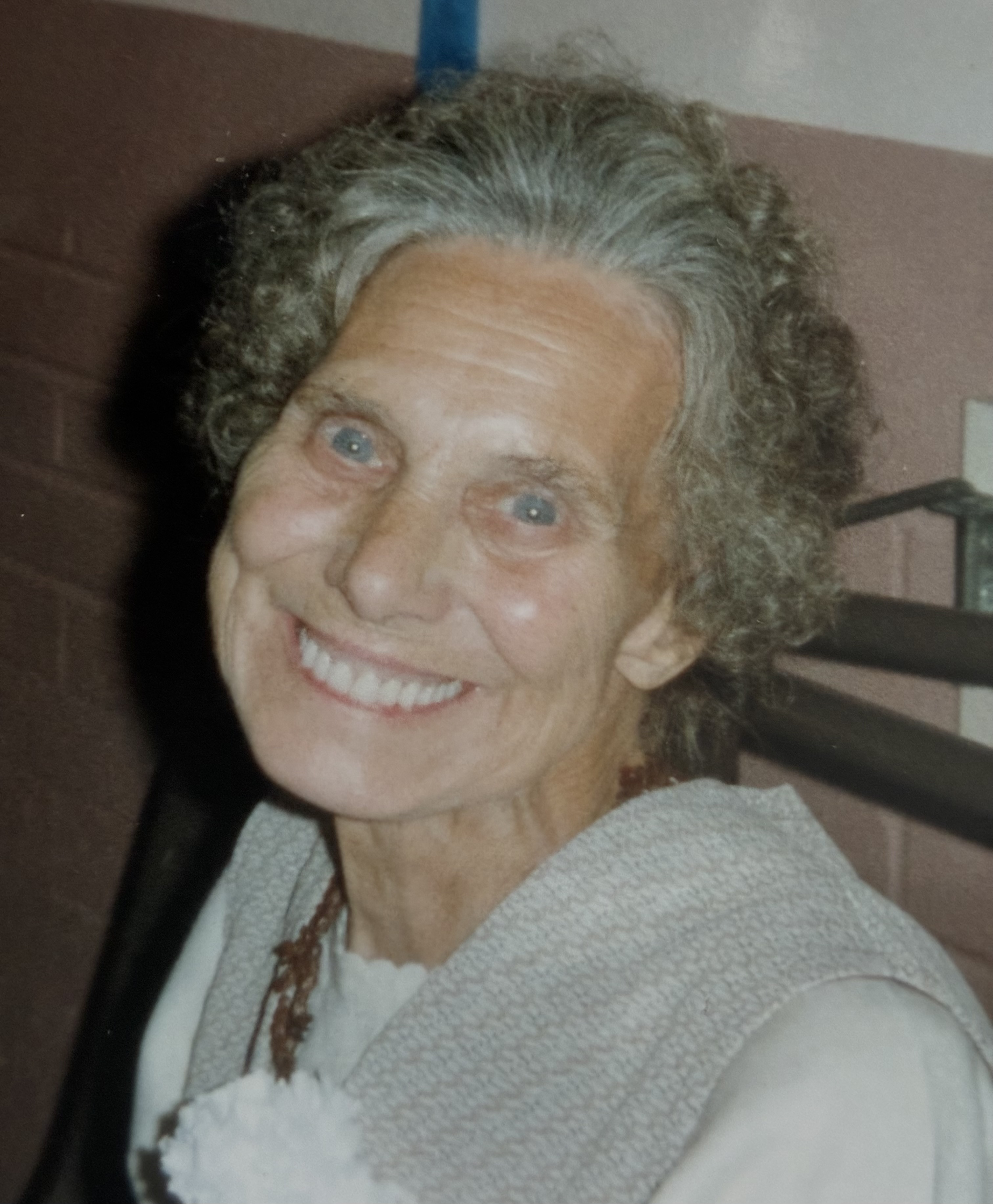
This story starts on Tuesday, 20th January 1920, the day I was born.
I was to be the first child of twelve, six girls and six boys, born to Jack and Elizabeth Tuck.
My first memories are from the age of six years old, I will try to leave nothing out of this story, including the scandals, the joy and the misery of growing up in such a large family.
I dedicate this story to all of my family and hope that is does not cause any offence!
GIRLS BOYS
Elizabeth Jack
Lilly Harry
Esther Joey
Rose Billy
Joyce Arthur
Amy Freddy
My first vivid memory is about 1926, during the National Strike.
We lived in a tiny house in London, the address was 1 Macclesfield Place, Dingly Road, EC1. There were only six houses along this little mews. The one we lived in was a one-up and one-down, with a stone floor downstairs and a small area with the solid fuel cooker. Outside, in the backyard, was the toilet.
When you entered the house, you came through the front door straight into the downstairs room. There was a double bed under a tiny window, a table and two chairs on the other side of the room. The only lighting we had was from oil lamps and the natural light from the window.
We used to have a bungalow-type tin bath, and Saturday night was bath night. We all had to use the same water as we couldn't afford the coal to heat water for separate baths.
We stayed in this house until there were ten children, so you can imagine how cramped it was.
There were two double beds upstairs, one for my sisters and me, the other for my brothers. Mum and Dad slept in the double bed downstairs.
Dad worked on the railway as a Porter at Farringdon Road Station. Friday was pay day, and we used to live in fear every Friday night as my Dad used to come home drunk. My Mum used to turn off the oil lamps in the evening so when Dad got home, he could not fall over and knock the lamps over and set fire to the place. He was not a violent drunk, but he was clumsy.
During the period of the general strike, there was an incident that I will never forget. Around the corner from where we lived, there was a main depot of Cater Pattersons, the road haulage company. They used to keep a lot of horses in the depot. They were kept in underground stables. For some reason or another, the horses managed to get out of the stalls and started to stampede. They ran wild in the streets; there must have been about twenty or more horses running around in complete panic. We were playing in the streets at the time, and one of the girls we were with was kicked in the head by one of the horses and over the next few days, her hair turned white and started to fall out. The horses also killed four of the employees of Carter Patterson. I never did find out the cause.
One day, we had a visitor from the then Gas Light and Coal Company. He told my mum that we were to have Gas Lighting installed in our house. They were also going to give us a gas cooker free of charge. This was a real joy for all of us, because it meant that we no longer had the worry of Dad burning the house down. Also, it was much cleaner and smelled less. The oven was also a wonderful thing because it made Mum's life so much easier. The oven was black and had to be cleaned using Zero Blackening. We also had a copper installed to heat water. I was about eight years old at this time.
One Saturday afternoon, shortly after the gas was put in, we were all stuck indoors because it was raining, and Mum had to go out to do some shopping with the few shillings that she had. My younger sister, Esther, was sitting on the copper which was below one of the gas mantles, and as she moved, her head touched the mantle, and it broke, allowing the gas to fall into her hair and set it alight. I rushed forward and put out the flames using my bare hands. We had to wait for Mum to come home from the shop to take us both to Barts Hospital. We were both quite badly burned and were in the hospital for about four weeks.
Shortly after this incident, my Mum gave birth to my other sister, Amy. She was a lovely baby. Mum needed some vinegar, so I said that I would go and get it from the shop for her. I asked if I could take Amy with me, and Mum said yes. I could not wait to show off my new sister; she was about six weeks old at the time. As I returned from the shop, I tripped and fell forward. As I fell, I put my hand in front of myself to prevent Amy from hitting her head on the ground. The bottle dropped and broke. I then fell with my hand onto the broken bottle and slashed my right arm open; all of the bone was exposed. Again, I was rushed to Bart Hospital. When I went into the Treatment Room, they explained that I would need stitches and that it would be painful. In those days, they didn't give anaesthetics while stitching up wounds.
When they stitched me up, they also stitched up the leaders (tendons) in my arm, which has caused me no end of problems. I was kept in the hospital for some time, although I cannot really remember how long.
Whilst I was in hospital, my young brother was brought in because he had been run over and had a broken arm. He was only four years old. My parents must have been at their wits' end.
The treatment on my arm took over three years. Part of the treatment was electrotherapy. My arm was placed in an oblong tray about eighteen inches long by eight inches deep. Water was put in the tray, and an electric current was passed through it. This would cause my fingers to extend and straighten. This continued for about thirty to forty minutes at a time, then I would have my arm massaged for another thirty minutes. I had to endure this treatment for three days a week.
Because of all the time spent at the hospital, my education suffered. The nurse who attended to me was a very caring person and got in touch with the Hospital Almoner. She arranged for all my brothers and sisters to attend the Christmas Show that was laid on for all the needy children in the hospital. Even Mum and Dad came, the party and show were really wonderful. After the show, we were all taken up onto the stage to see Father Christmas and his fairies. We were all given a present and a parcel of clothes, which were all wrapped up in Christmas paper.
When we got home, we opened our parcels and found that all the girls got a blue velvet dress and a pair of knickers each. The boys got dark green jumpers and a pair of grey flannel trousers. We were invited to this event for the next four years. We all looked forward to getting these new clothes at Christmas.
As I mentioned earlier, my Dad worked on the railway; every year or so, he would be issued with a new replacement uniform, which consisted of a suit, an overcoat and a cap. Mum used to take his old overcoat, clean it, and then put it back for Dad to use. His new overcoat was then taken down to 'Uncles' (the local pawnbroker). When the old coat was getting past its best, she would redeem the new one. Dad was none the wiser, or if he was, he never mentioned it.
The years between 1928 and 1933 were a struggle for us, as they were for all. The country was still recovering from the effects of the national strike. In the summer evenings after school, I used to take some of my brothers and sisters to a place in Hoxton we used to call 'Daddy Bible Mission', where we could get a hot meal, this was usually mashed potato, meat and gravy or Shepherd's pie. We could also get old toys and clothes that the wealthier people had donated to the charity.
At the Mission, we used to form two queues, one for those with small children in prams and one for the older children. I used to go in the first queue. If I got in first, I would get our meals and feed the children in the pram. On the way out, we used to collect gifts of either toys or clothing. If the older children had not got in by the time I came out, we would change clothes, put the ones we had been given under the babies and then go in again. The door was always attended by an old man; his image is stuck in my mind, he had a hunched back and his chin was always pressed onto his chest. He never once discovered our quick-change trick.
On one occasion, we were all waiting to go into the Mission when a large car pulled up, a man and woman got out of the car, the man was on two walking sticks and had a metal frame around his head, he was bent almost double and could only look down. The woman was giving all the people in the queue a ticket; the tickets were for a big party that was going to happen at a later date. Rumour has it that the man had been involved in a plane crash and suffered these injuries as a result. His name was Dr Mills, and he was a millionaire philanthropist, and he was the founder of the Mission.
The party was held in a big hotel on City Road. It was a really wonderful party, we all ate too much and thoroughly enjoyed ourselves.
Another thing that sticks in my mind was when the gas man came to empty the meter, he would take the money box off the meter and empty it onto the table, then he would count the contents of the meter and check the reading. After he had read it, he would then calculate how much to give us back.
When he had gone, my Mum and Dad would then share out what was left amongst the older children. With this money, generally about two or three pence, we would go to the Saturday morning pictures, which were alright. The problem was that most of the programmes were serials and we could not afford to go often enough to know what the stories were all about. They would always stop the film at an exciting part and say, "To be continued next week". If we could not afford it the next week, I used to say, "Can we take it out of the money box on the wall?" "That man can take it, why can't you?" But of course it did not work like that did it! I never ever saw the end of a serial.
I left school at the age of fourteen. My first job was working in a sports clothing manufacturer as a machinist. We worked five days a week and eight hours a day, for this I was paid the princely sum of five shillings and sixpence a week. The equivalent of twenty-seven pence a week in today's money. Out of this, I paid two and six to my Mum for my housekeeping and sixpence into what we called the family club. This left me with two shillings for myself to buy all the bits and bobs that I needed. I left that firm after about five weeks. I didn't tell my Mum, because at this job I got paid more than double what I was earning, twelve and sixpence a week. When I was asked how I could afford the things I was buying with the extra cash, I told Mum that friends had bought them for me. When I did tell Mum the truth, she was obviously upset, but I think she understood why I did it. Although I did not feel mean at the time, I did afterwards when I thought of how Mum struggled to make ends meet. But then again, I used to do my bit helping to look after the younger brothers and sisters, washing and dressing them, getting them ready for school and so on.
When I was about fifteen, Dad came home one day and said that he had some great news: we were going to move to a bigger house in a nicer area.
When we went to see the new house, we came out of our front door, turned left into Dingly Road, and left again into Macclesfield Street. The house we were going into backed onto the one we were leaving. The main difference between the two was that the new house had four rooms, two up and two down; it also had a big kitchen and yard, and the toilet was still outside.
The day we moved was sheer chaos, we could ot afford a barrow so everything was carried around the streets, it was like a parade of ants going from one nest to another.
My sister Lilly and I were as pleased as punch to be moving because we were now both at work and looked forward to having a bit more room for our own things.
When we got the furniture and everything into the new house, we had to get some fumigation candles into the house to get rid of the bed bugs, ours and the ones already living in the new house. This was a never-ending battle. We used to call them the Red Army. We never totally got rid of them, but we tried.
We put lino down on the floors, something we had never had before. We had never even seen carpeting; that was only for the very rich people.
Mum did get a new oven, which was like having all her Christmases at once. Mum was also about to have another baby, which is probably why we moved. Now all of us girls had our own room and only two to a bed. All the boys had their own room. Mum and Dad still had the bedroom downstairs at the front of the house. We also had a large room at the back of the house that we used as a living room. It seemed to us at the time that this house was enormous; we all had lots of room compared to No. 1. we were now only two to a bed.
I was about sixteen or seventeen when Mum had the eleventh baby, this one was a boy called Billy. By this time, Jack, Lilly and I were all at work, and Rosie was about to leave school and start work as well. It was nice to have that little extra privacy that the new house gave us all.
We were now beginning to have a bit more of a life outside of the home environment. We all had our own friends and were starting to realise that fashion and style were more important to us.
Dad was still working on the railway, although he had now been transferred to Kings Cross Station which was a passenger station. He was now helping to load passengers and their luggage onto trains instead of goods. This meant that he now earned more money largely from tips he received from grateful passengers.
We had lived in this house for about a year when Mum informed us that she was carrying again. Billy was only about three months old. This really got to me; I even had a row with my Dad over it. I told him he should be ashamed of himself as he was only thinking of his own pleasure and did not mind about Mum and the rest of us. He hit me; this was the first time my Dad had hit any of us, and it came as a great shock. He put his hand across my mouth and told me in no uncertain terms never to talk to him like that again, and I can tell you I never did. It just seemed to me at the time that I had rarely seen Mum with a flat tummy, but then again, they had nothing else to do, what with no television and very little radio to distract them.
Dad was a good man, but he never seemed to give us any individual time. I cannot ever remember him sitting any of us on his lap or giving us a cuddle or a kiss when we were not feeling well. He just appeared to us as the person who lectured us on what was right or wrong, and that we should always be on our best behaviour and always be nice to each other. He would always tell me to learn as much as I could about my work, which is a good thing. By this time, I had become a top machinist, and I tried to make sure that I was the one who was given the training in new machines and methods of production. I was determined to be the best machinist in the factory and thereby earn the most money.
It is now 1937. I am seventeen years old, and Mum is about to give birth yet again. This time it is another little boy, and Mum called him Freddie. We were now twelve children and two parents still living in a four-room terraced house in the centre of London.
Things carried on in the usual way, Dad drunk every Friday might, but at least we could leave the gas lights on because no matter how drunk he might be, Dad could not climb the walls to knock them over.
The year is 1938, it is a really hot summer, and I could not sleep. The time was about six in the morning, and the Red Army had returned with a vengeance. I had been bitten quite badly and decided to get up and sit at the open front window to get some fresh air. This lad came down the street whistling as he walked along. I had seen him several times before, but had not taken much notice of him. I thought he looked a bit funny; He had two front teeth missing, but he still looked alright. He said to me, "What's up, can't you sleep?" I said "No, we are surrounded by the Red Army", to which he replied, "Don't worry about them luv they are not able to get over here, not with us to protect the country". I did not know that he was a Territorial Army member, and he did not realise that I was talking about bed bugs!
We started dating a little after that, and I had to explain what I meant.